15,000 YEARS8 CHAPTERSONE INCREDIBLE ANIMALBERINGIA · ABOUT 15,000 YEARS AGO Interpretive illustration
About the illustrations & evidence
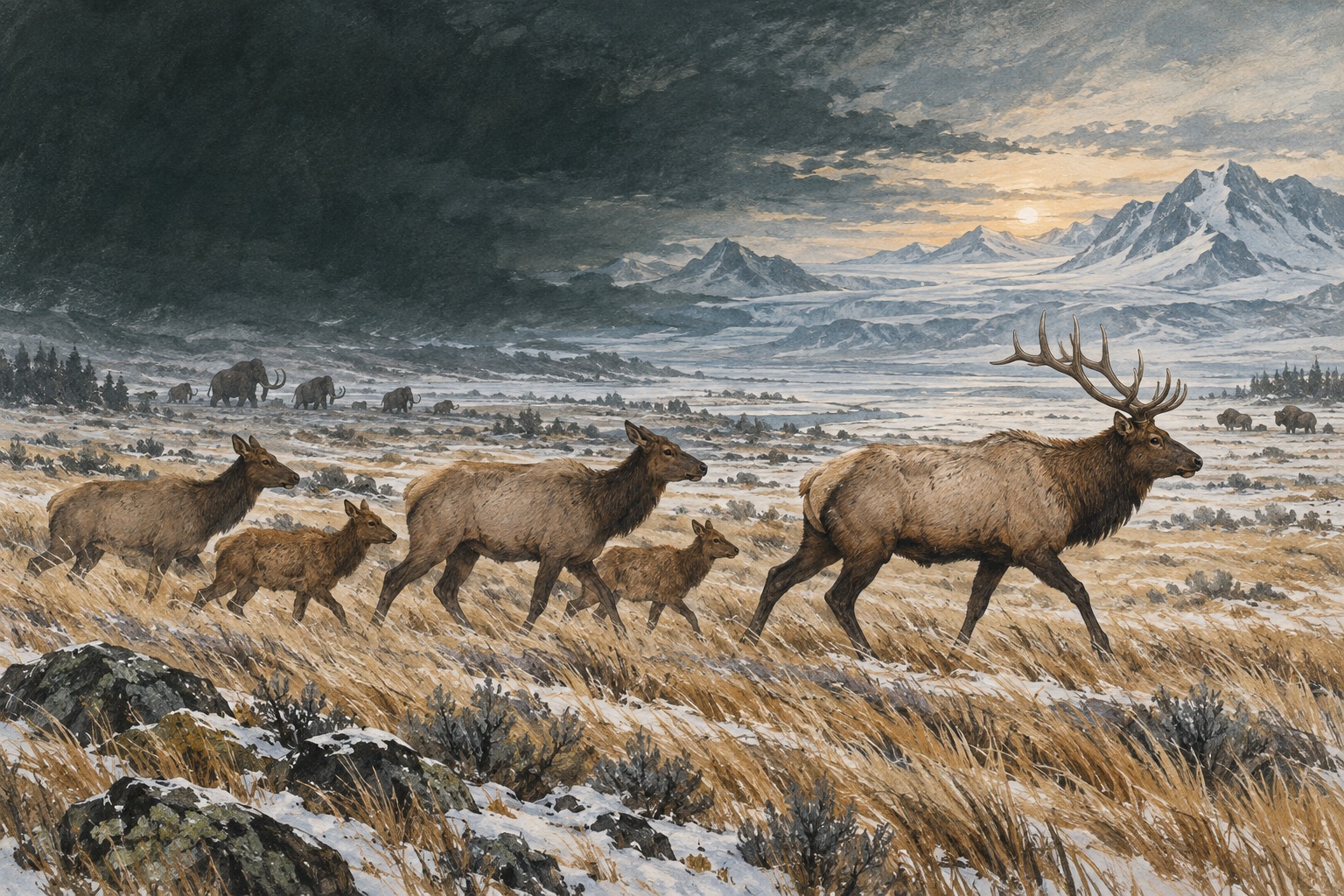
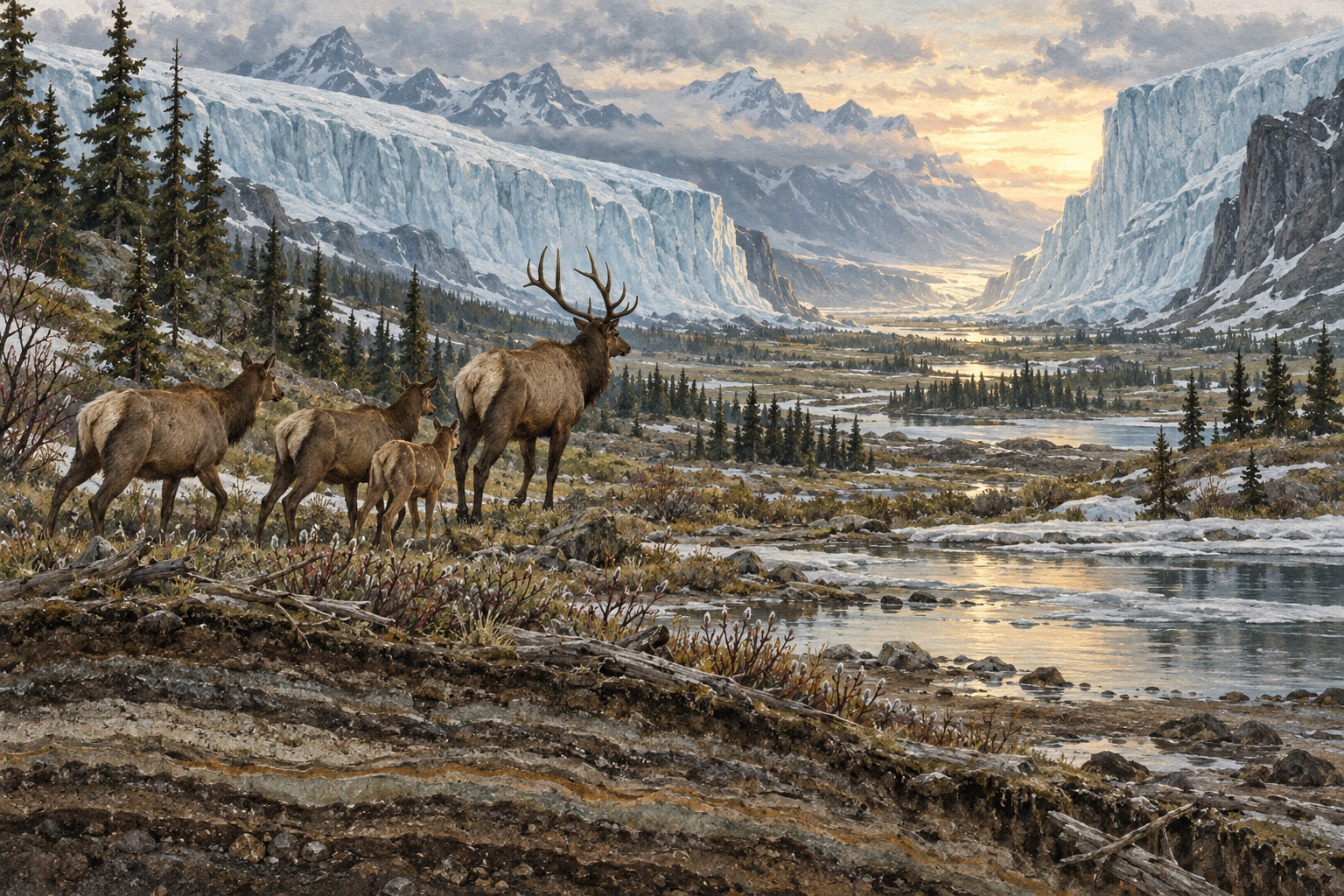
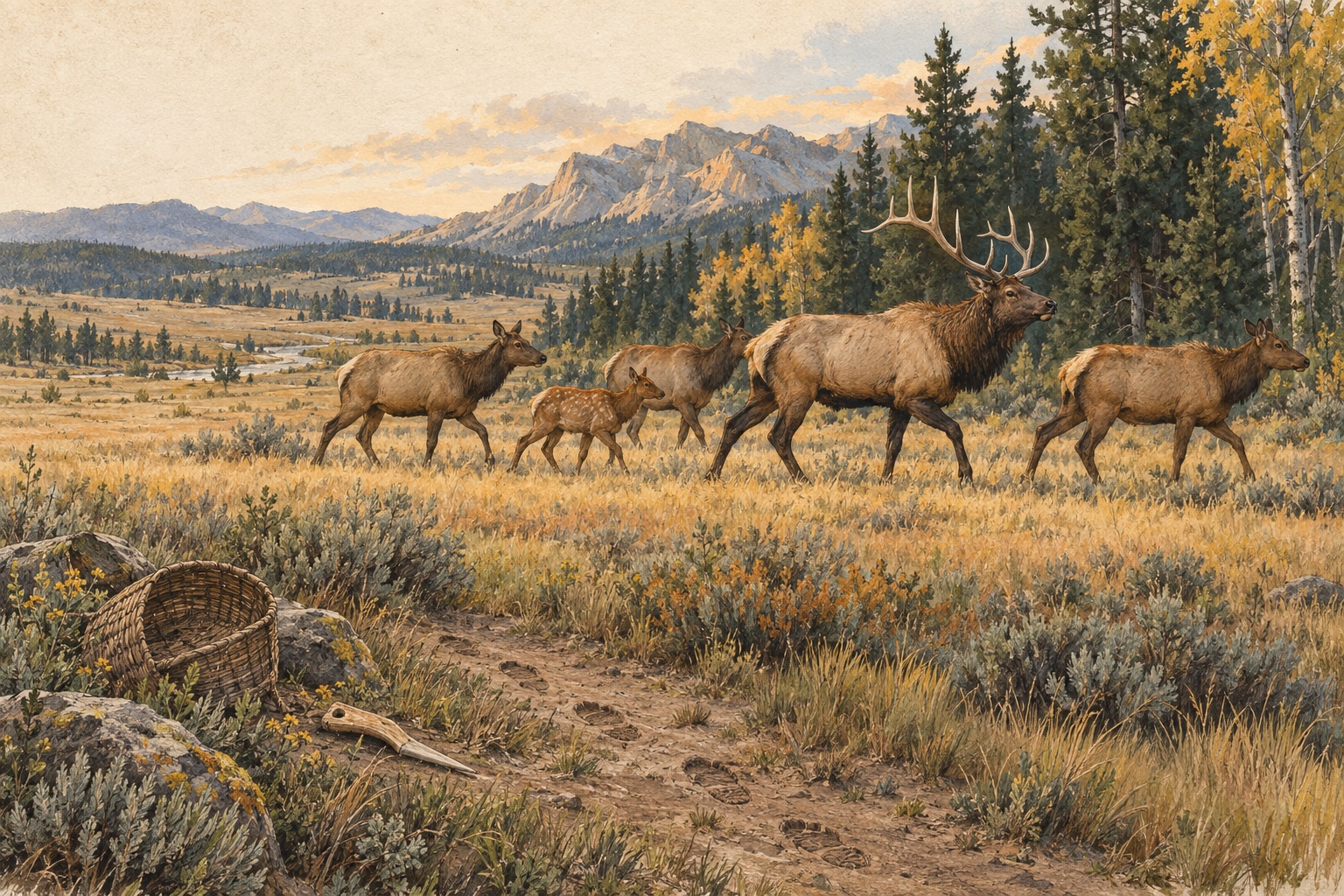
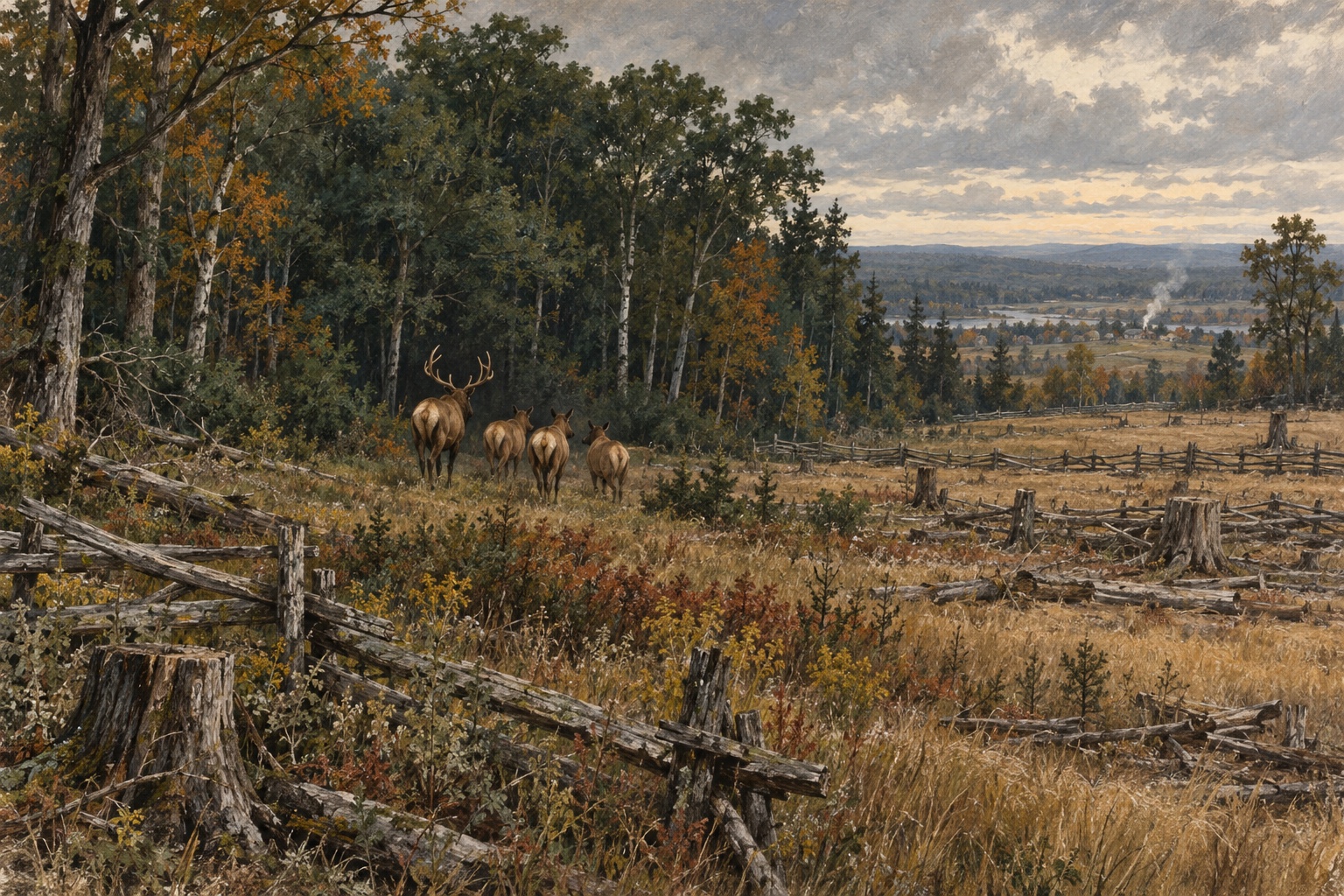
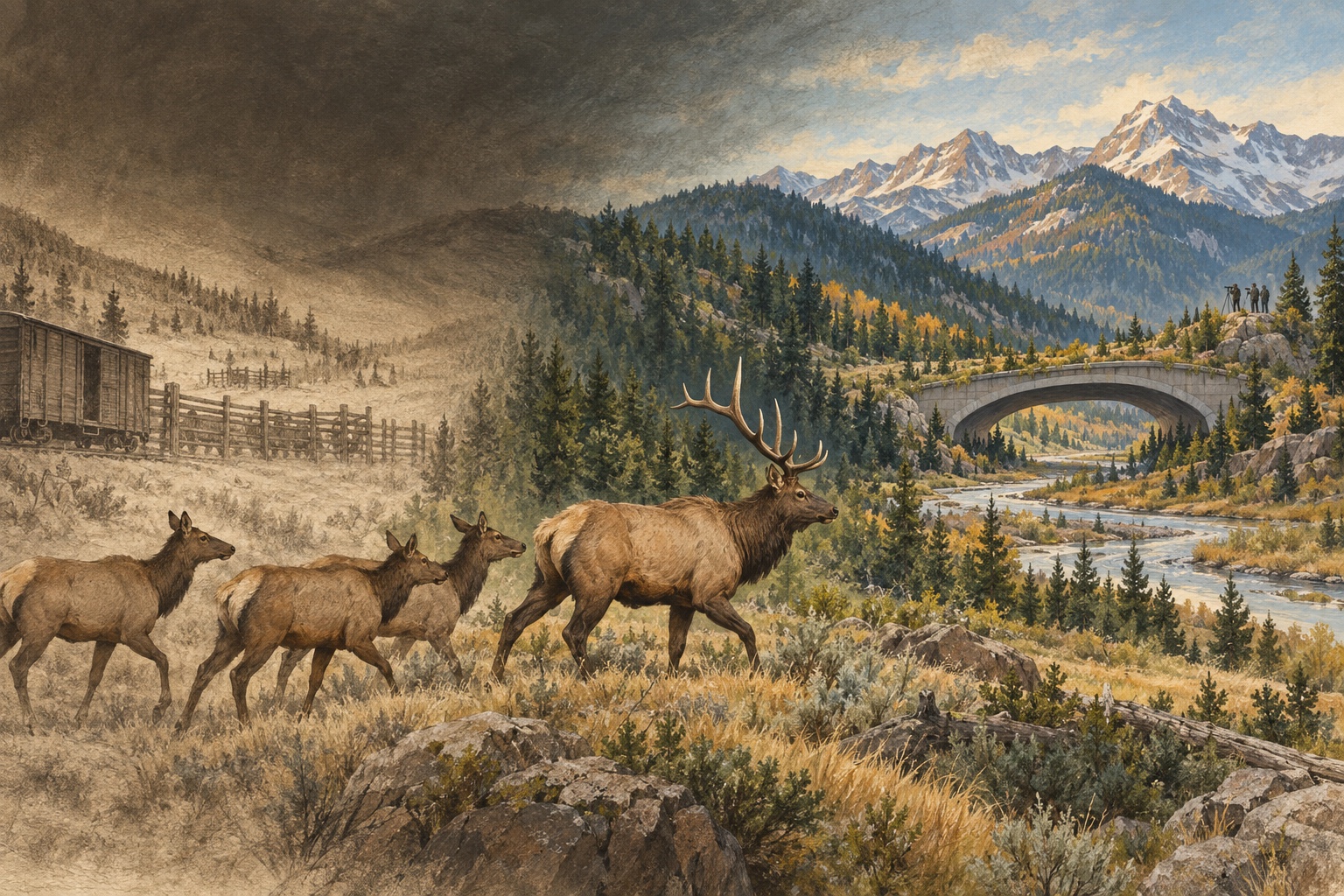
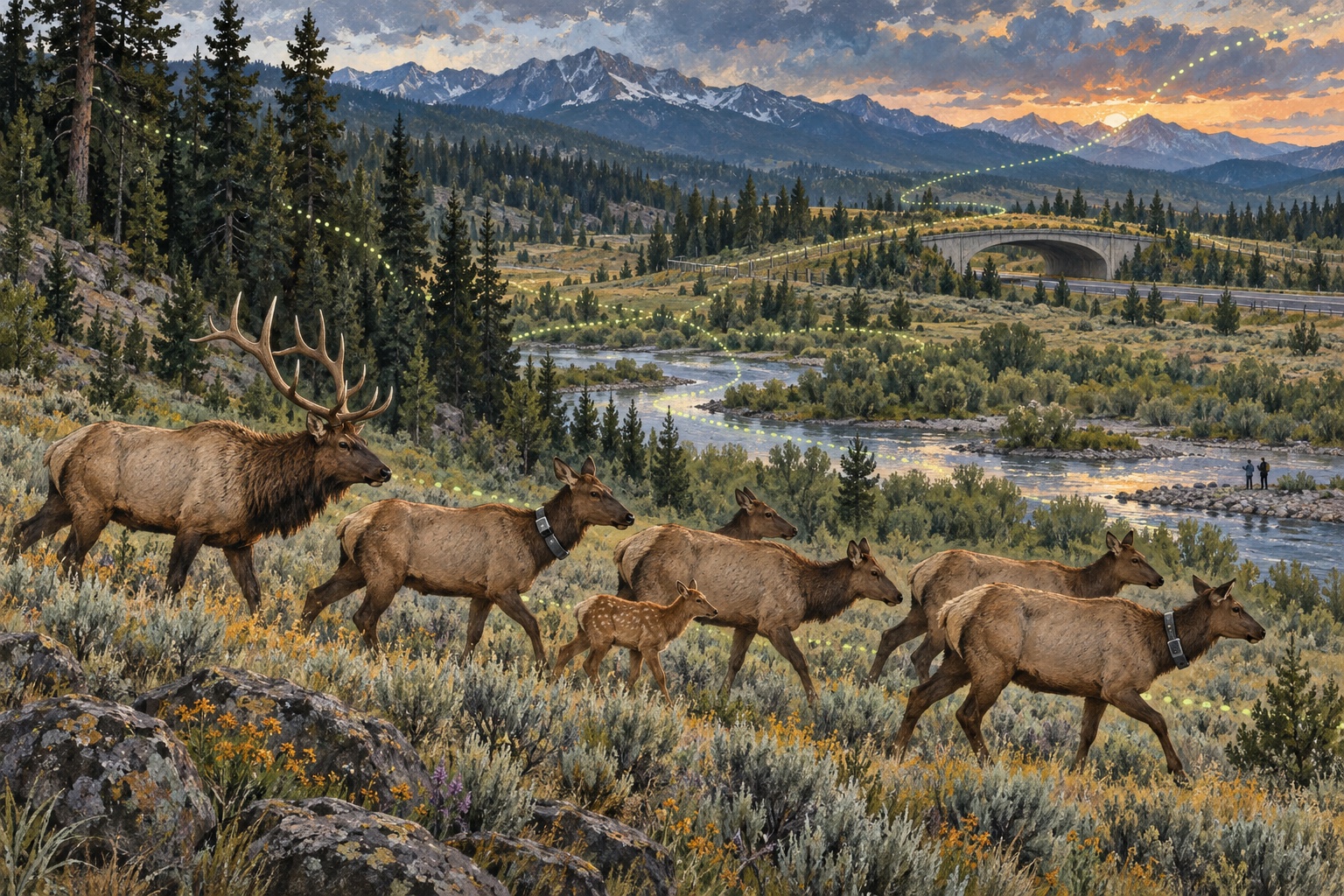
Original, AI-assisted hand-drawn style illustrations create atmosphere. Large labels identify each chapter’s date or central milestone. Dates and claims come from the linked scientific, Tribal, state, and federal sources. The artwork is interpretive, not a reconstruction of one documented scene.
ELK THROUGH TIME01 / 08
Estimated from genetic evidence15,000YEARS AGO
TIMELINE PROGRESS
Arrival
ORIGINAL HAND-DRAWN STYLE ILLUSTRATION
01
ABOUT 15,000 YEARS AGO
A northern lineage finds a new continent.
Elk evolved in Eurasia. Near the end of the last Ice Age, a population moved into North America through Beringia.
Ancient DNA research places this colonization at roughly 15,000 years ago. It was not one heroic march. Habitat opened and closed as climate, ice, and vegetation changed.
As the continental ice sheets pulled apart, an interior passage slowly became an ecosystem.
Lake sediment DNA shows elk and moose in the corridor by about 11,500 years ago, after steppe plants, bison, and mammoths had appeared. The evidence captures a changing habitat, not a single crossing date.
Across the continent, distinct Native nations developed their own relationships with elk, land, seasons, and one another.
The Cayuse, Umatilla, and Walla Walla peoples describe a seasonal round in the Columbia River region that included elk among many foods. Those living traditions continue. No single story can stand in for every nation.
Commercial exploitation, expanding settlement, and habitat loss erased elk from huge parts of their range.
In the southern Appalachians, elk disappeared from North Carolina by the late 1700s and from Tennessee by the mid-1800s. Pennsylvania’s native elk were gone by the late 1800s. By 1900, elk across North America had fallen to alarming levels.
Pennsylvania received its first shipment of Yellowstone elk in January 1913.
The animals were released with little acclimation. Some traveled as far as 40 miles within a week. More elk arrived in 1915, helping establish a population where native elk had disappeared decades earlier.
Great Smoky Mountains National Park released 25 elk into Cataloochee Valley in 2001, followed by 27 more in 2002.
The project restored elk after an absence of roughly two centuries. It also showed that a release is only a beginning. Researchers tracked survival, reproduction, predation, movement, and the herd’s effects on the landscape.
GPS collars now reveal migration routes, winter ranges, and the stopovers elk use between them.
The maps help state, Tribal, and federal partners see where moving animals meet roads, fences, private land, and development. The technology is new. The seasonal movement is not.
“Elk history” cannot be reduced to European settlement, wildlife policy, or one national timeline. Native nations have distinct and continuing relationships with elk and their homelands.
This first edition points to the Confederated Tribes of the Umatilla Indian Reservation in their own words. Future additions should be built with more first-person Tribal sources, named by nation and place.