On the menu.
Grasses, leaves, and other plants fuel an elk’s day. Like other deer, elk are ruminants: microbes help break down plant material, and chewing cud gives a meal another round of processing.
How deer digestMEET THE MAIN CHARACTER
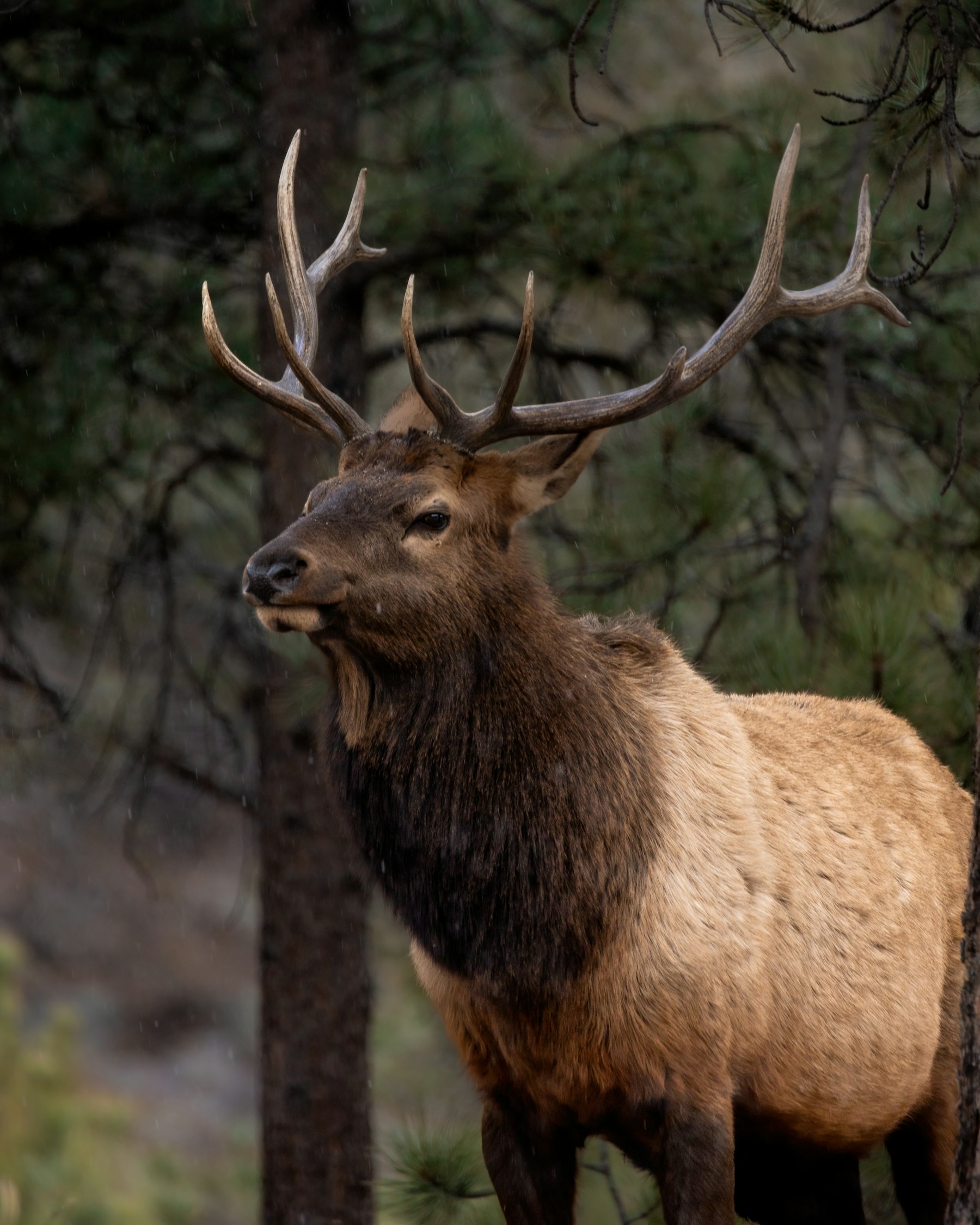
Get to know the animal behind the antlers: explore its anatomy, landscapes, changing seasons, and everyday habits.
01 / BUILT DIFFERENT
Every detail has a story.
Pick a point. Get closer.
GROW. SHED. REPEAT.
That entire rack is bone. A bull sheds it and grows another set, nourished by blood-rich velvet. Move through the antler year to see the cycle.
Explore the antler yearFrom mountain meadows to coastal grasslands and rainforests, elk make a life in remarkably different places. Explore four North American landscapes.
HIGH MEADOWS · FOREST EDGES
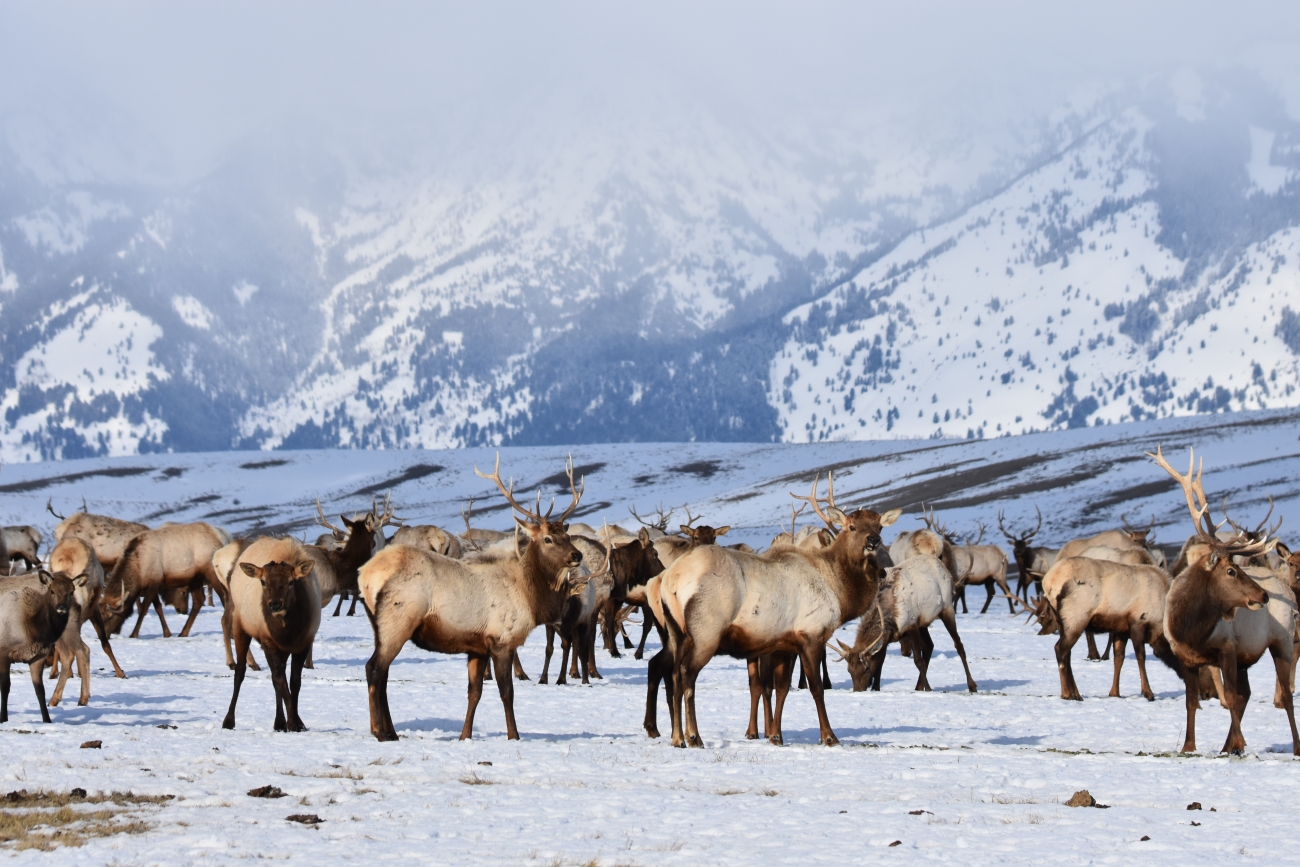
Elk move between open feeding areas and sheltering forests. In the Greater Yellowstone landscape, some follow fresh plant growth into higher country and descend as snow makes food harder to reach. Others stay closer to home.
Migration is a strategy, not a rule. Different herds live on different seasonal schedules.
Explore Yellowstone elkThese are habitat spotlights, not a complete range map. Elk occupy a wider range of landscapes than the four shown here.
05 / THE RHYTHM OF ELK LIFE
AUTUMN
The rut brings mixed herds, posturing bulls, and those unforgettable bugles. In many mountain herds, September and October are the great chorus.
Grasses, leaves, and other plants fuel an elk’s day. Like other deer, elk are ruminants: microbes help break down plant material, and chewing cud gives a meal another round of processing.
How deer digestCows and calves form social groups, while bulls often spend time apart outside the breeding season. The shape of a herd changes with the season and the resources around it.
Explore elk societyEarly mornings and evenings often bring elk into the open to feed. Between meals and movement, they rest. Slow observation reveals a world beyond the dramatic autumn rut.
Get to know their habitsLEGENDS & FIELD NOTES
THE ELKAHOLIC CHALLENGE
Five questions. A few surprises.
Absolutely no binoculars required.
LOVE THEM. LET THEM BE WILD.
Watch quietly. Give elk plenty of space. Use a long lens or binoculars, never food or calls to draw them closer. If your presence changes their behavior, step back. Leave calves and shed antlers undisturbed, and follow the rules wherever you visit.
A little kindness in the wildKEEP THAT CURIOSITY GOING