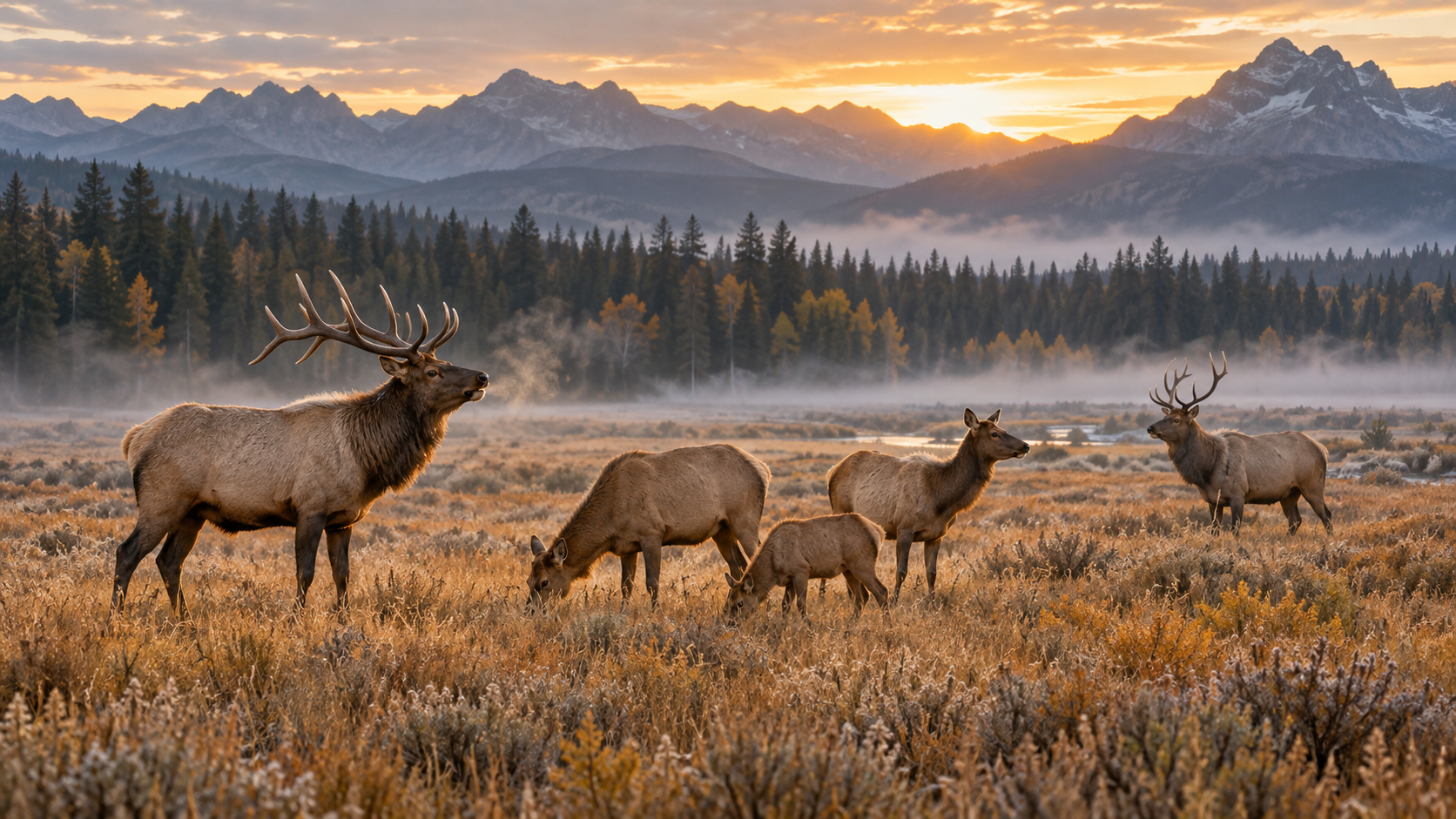
One meadow. A whole world of relationships. Discover the relationships behind the calls.
CHOOSE AN ELK. DISCOVER ITS ROLE.
AUTUMN / ILLUSTRATED MEADOW
TAP A MARKER TO MEET AN ELK
NPS FIELD RECORDING
AI-assisted still illustration. Selecting an animal or moment changes the camera view; the elk themselves are not animated. The scene illustrates relationships, not measured distances. Bugle audio is a separate NPS recording.
UNDERSTAND WHAT YOU’RE WATCHING
More than a bugle.
The rut is a changing relationship between animals, not a fixed pecking order.
The rut is the elk breeding season. Bulls compete for access to receptive females through calls, displays, and encounters with rivals. Yellowstone’s rut generally runs from early September to mid-October; timing varies elsewhere.
A satellite bull stays near the edge of a breeding group without currently tending that group. He may approach females when an opportunity arises. The term describes his role at that time, not a different species or an unchanging rank.
The rutting group is not a permanent family. Outside the rut, cows, calves, and yearlings often occur together, while adult bulls may form bachelor groups or live alone. Associations change with season and circumstances.
No. Bugles can advertise a bull to females and warn or challenge other males. A response may lead to an approach, but not every interaction escalates into physical combat. Context matters: a recording alone cannot tell the whole story.
“Herd bull” refers here to a male tending females during the rut. It does not mean that he permanently leads every animal’s movements. Guarding females and responding to rivals demand attention and effort.
The original AI-assisted meadow artwork illustrates herd roles. The guided view moves the camera across a still composition; it is not wildlife footage, measured movement, or a prediction of behavior. Summer and winter photographs show other elk.
Biology: Yellowstone and Grand Canyon National Parks, and Montana State University Extension. Source links appear beside the explanations. Reviewed September 2026.